
GO TO MARKET FASTER
Engineering expertise meets advanced additive manufacturing — FDM, SLS, SLA and SLM processes, 20+ qualified materials, and parts delivered across Australia from a team that understands how they'll be used.
We match the right technology to your part — based on material, tolerance, volume and end-use requirements. Hover or tap each card to explore.
The most versatile additive process — wide material range, fast turnaround, and cost-effective across most applications. From concept models through to production-ready housings, brackets and fixtures, FDM covers the broadest range of engineering needs.
Powder-bed fusion producing strong, functional parts without support structures. Ideal for complex geometries, batch production runs, and engineering-grade components that need consistent mechanical properties throughout the build volume.
UV-cured resin delivering the finest surface finish and tightest tolerances available in additive manufacturing. The preferred process for high-detail visual models, master patterns, dental appliances and applications where appearance is as critical as function.
Direct metal additive manufacturing producing fully dense components with mechanical properties equivalent to wrought material. For parts requiring the geometric freedom of additive manufacturing combined with the performance of precision-machined metal.
Upload your CAD file and get a real price in minutes — no back-and-forth, no waiting on a sales team. Our engineers review every order before it goes to print.
STL, STEP, OBJ and more. Our system analyses geometry and calculates material and machine time automatically.
Select FDM, SLS, SLA or SLM. Configure material, quantity, surface finish and delivery speed to suit your project.
Confirm your order and our team gets to work. Parts are inspected, packed and dispatched to your door — Australia-wide.
Upload your file now and receive your quote in minutes. No account required to get a price — just your CAD file and requirements.
Get Instant QuoteEngineering review on every order · Australian-owned & operated
We're not a print shop. Our team combines deep engineering knowledge with advanced manufacturing capability — so your parts are designed to perform, not just to print.
Our engineers review every order — checking geometry, wall thickness, orientation and material selection before a layer is printed. DFM advice is included, not charged extra.
Express orders from 24 hours. Standard turnaround in 3–5 business days. We operate at production capacity — not hobbyist scale — so lead times are consistent regardless of volume.
From design and 3D printing through to CNC machining, assembly and inspection — we're a single-source partner for complex programs, not a one-trick print service.
Post-print inspection, dimensional verification and quality documentation on request. Every part leaves our facility meeting the spec you quoted against — or we reprint it.
Your files, your IP, your parts — handled locally. No overseas outsourcing, no lag. We support Australian industry by keeping manufacturing onshore and the supply chain tight.
No salespeople, no delays. Upload your file, configure your requirements and get a real price immediately — backed by engineering review before production begins.
From aerospace-grade titanium to dental models and mining replacement parts — we deliver advanced additive manufacturing where precision matters most.
Lightweight titanium and aluminium structural components, brackets and complex internal geometries for the most demanding environments.
Rapid replacement parts, custom fixtures and wear-resistant components in engineering-grade nylons and metals — built for harsh conditions.
High-accuracy SLA models, surgical guides, dental appliances and custom prosthetic components with exceptional surface finish and fine detail.
Functional prototypes, tooling, jigs, fixtures and end-use interior components — from concept to production-intent validation.
Complex housings, custom enclosures, replacement parts and production tooling — manufactured to engineering drawings with tight tolerances.
Rapid concept modelling, research prototypes and educational components with fast turnaround and flexible minimum order quantities.
Our CNC machining team delivers precision metal and plastic components that complement your additive workflow — from simple turned parts to complex multi-axis machined assemblies.
Upload your CAD file for an instant quote, or contact our engineering team to discuss your project.

PLA is a popular biodegradable plastic made from renewable resources like cornstarch. It’s known for its ease of use, making it great for beginners creating prototypes, models, low-stress parts, and art and decorative items.
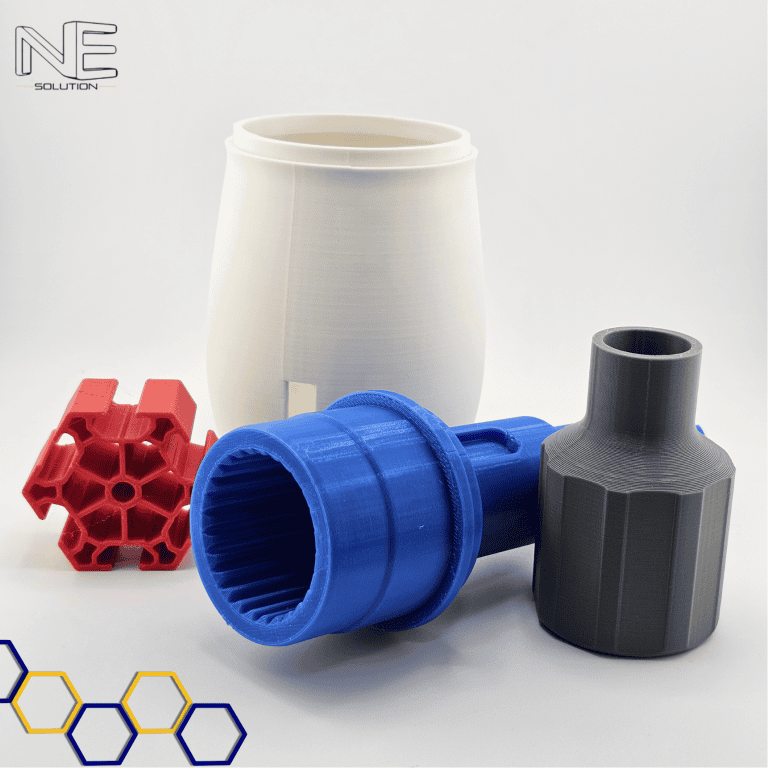
PETG is a durable and versatile plastic with good impact resistance and a slightly flexible nature, ideal for functional prototypes, mechanical parts, bottles and containers, and jigs and fixtures.
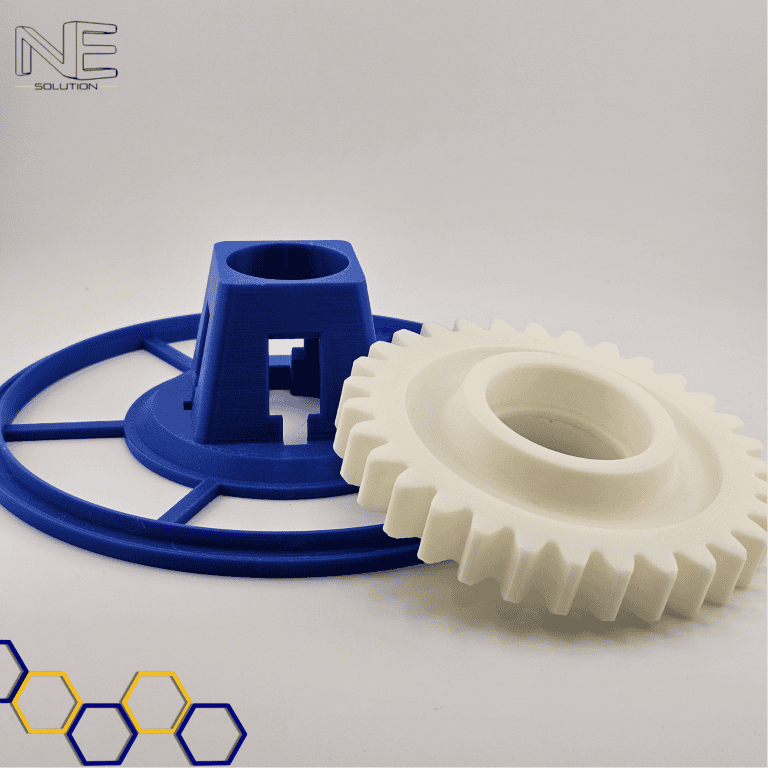
ABS is a common thermoplastic known for its strength, stiffness, and impact resistance, often used to create enclosures, automotive parts, toys, and electronics housings.
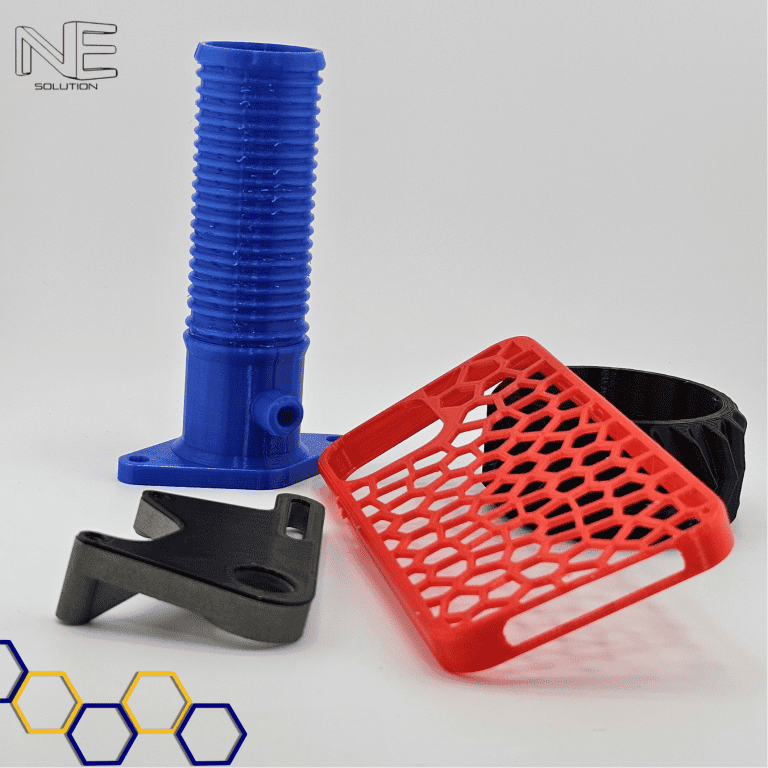
TPU is a flexible and elastic material with excellent abrasion and tear resistance, commonly used for phone cases, wearable devices, seals and gaskets, and other flexible parts.
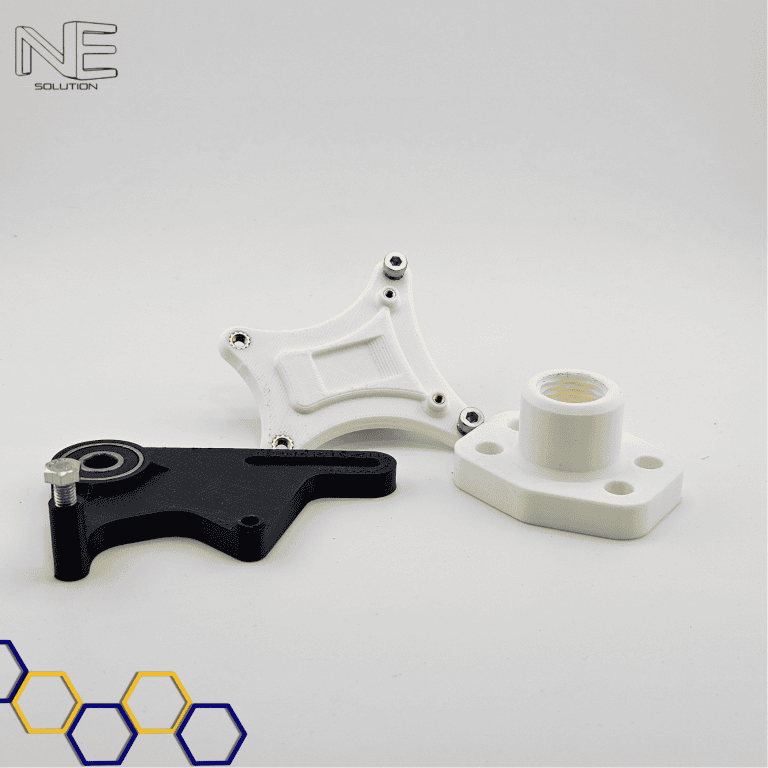
Nylon is a strong and durable material with excellent abrasion and chemical resistance, making it a good choice for gears and bearings, functional prototypes, mechanical parts, and automotive components.
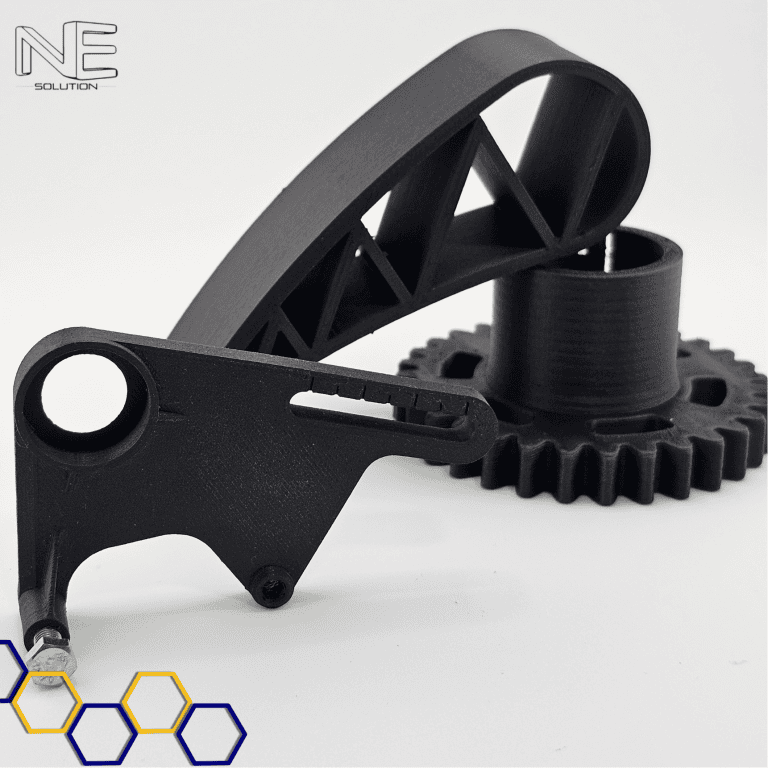
Carbon fiber filaments are typically a composite material consisting of carbon fibers embedded in a base material like PLA or Nylon. This gives them a high strength-to-weight ratio, making them ideal for applications like drones and RC aircraft, automotive parts, sporting goods, and high-performance parts.
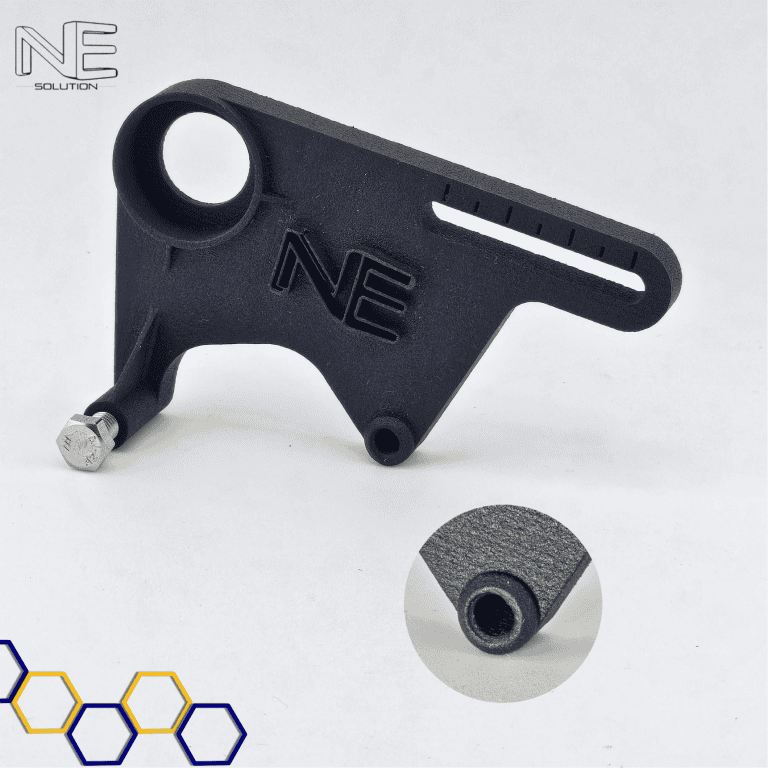
SLS is an advanced 3D printing technology that uses a high-powered laser to fuse powdered material, typically nylon, layer by layer. This process creates strong, durable parts with intricate geometries, ideal for functional prototypes, end-use parts, complex assemblies, and applications requiring high heat and chemical resistance. Think aerospace components, medical devices, and automotive parts.
Pros:
Cons:
SLS Materials:
While nylon is the most common material for SLS, we can also print in the following materials:
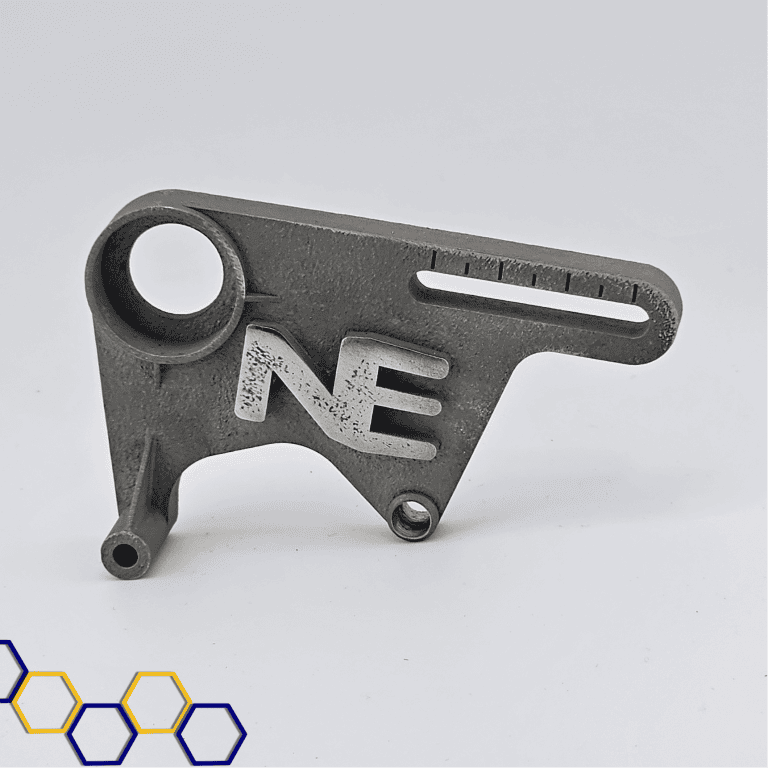
SLM is a cutting-edge metal 3D printing technology that uses a high-powered laser to completely melt and fuse metal powder, layer by layer. This process produces fully dense, high-strength metal parts with exceptional accuracy and complex geometries. It’s ideal for demanding applications in industries like aerospace, medical, automotive, and tooling, where precision and performance are critical. Think intricate medical implants, lightweight aircraft components, and durable tooling inserts.
Pros:
Cons:
SLM Materials:
We can print in a variety of metals you:
